
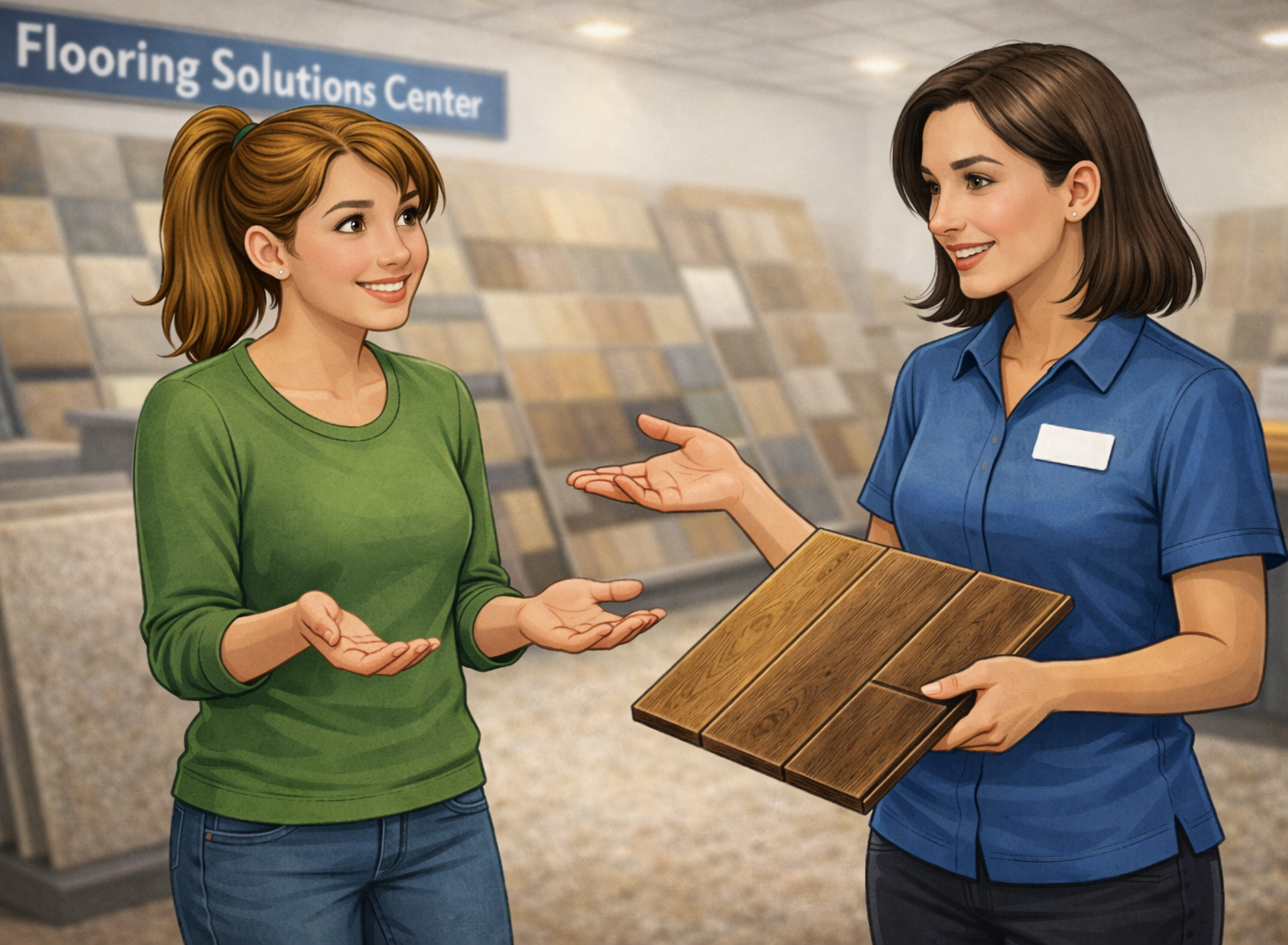
Flooring dealers often struggle with this key question in the sales process:
When should we introduce accidental damage protection?
Should it be presented at the end of the sale as an optional add-on, or positioned as part of the complete flooring solution from the beginning?
In an increasingly competitive home improvement market, the answer matters. How you present flooring protection plans can directly impact close rates, average ticket value, customer confidence, and long-term profitability.
The most successful retail flooring dealers bundle accidental damage protection and do not treat it as an upsell.
They position protection as part of the product itself.
What Is Accidental Damage Protection in Flooring?
Accidental damage protection is a service plan that covers everyday incidents not included in most manufacturer warranties.
This typically covers:
- Food and beverage spills
- Pet stains or damage
- Scratches and surface wear
- Snags or tears
- Household accidents
Unlike a standard manufacturer warranty, which primarily covers product defects, a flooring protection plan addresses real-life events that happen after installation.
For homeowners, that distinction is critical.
Why Manufacturer Warranties Are Not Enough
Many customers assume a manufacturer warranty covers any issue that may arise with their new floor.
However, most warranties:
- Cover manufacturing defects
- Exclude accidental damage
- Require lengthy claims processes
- May involve pro-rated reimbursement
- Often create frustration during resolution
When customers discover these limitations after an incident occurs, it can damage trust, not just in the product, but in the retailer.
By proactively explaining the difference between a manufacturer warranty and an accidental damage protection plan, flooring dealers reinforce their role as trusted advisors rather than transactional sellers.
The Problem with Selling Protection at the End of the Sale
When protection is introduced after:
- The floor has been selected
- Pricing has been negotiated
- The customer is mentally committed
…it feels like an add-on.
Even when the protection plan offers real value, its timing can make it feel optional, or worse, like an upsell.
This often leads to:
- Lower attachment rates
- Reduced perceived value
- Missed revenue opportunities
- Customer hesitation
The psychology of the sales process matters. When protection is positioned separately from the product, customers evaluate it separately.
Why Bundling Accidental Damage Protection Into the Flooring Sale Works
High-performing flooring retailers integrate accidental damage protection into the core offering.
Instead of asking, “Would you like to add protection?”
They present flooring as a complete solution that includes protection.
Benefits of Bundling Protection
- Increased Customer Confidence
Customers feel secure knowing they are protected against unexpected costs. - Higher Close Rates
When protection is integrated into the product narrative, objections decrease. - Improved Average Ticket Value
Bundled offerings naturally increase total transaction value without feeling like an upsell. - Stronger Gross Margins
Protection plans often carry favorable margin structures compared to hard goods alone. - Reduced Post-Installation Complaints
A clear claims management pathway improves after-sale service outcomes. - Greater Customer Lifetime Value
Customers who experience smooth claim resolution are more likely to return and refer.
When protection is integrated into the flooring sales process, customers don’t feel sold.
They feel supported.
Positioning Protection as Part of the Product
The key shift is simple:
Move protection from the end of the conversation to the beginning.
Instead of presenting flooring as a standalone product, present it as:
- Performance
- Style
- Warranty
- Maintenance expectations
- Accidental damage protection
Together, these components form a complete flooring solution.
This approach aligns with how customers think:
They are not just buying flooring.
They are investing in peace of mind.
Operational Advantages for Flooring Dealers
Bundling protection into your offering does more than improve sales metrics.
It also:
- Creates a clear post-installation support pathway
- Reduces friction during claims
- Strengthens brand reputation
- Differentiates your store from competitors
- Positions your business as service-oriented rather than price-driven
When claims are handled quickly and professionally, often at no additional cost to the customer, the experience reinforces trust.
And trust drives referrals.
Key Takeaways for Retail Flooring Dealers
- Customers expect a complete solution, not just a product.
- Manufacturer warranties do not cover everyday accidents.
- Selling protection at the end reduces perceived value.
- Bundling protection increases attach rates and average ticket value.
- Integrated protection strengthens long-term loyalty and profitability.
- Protection should be positioned as part of the product, not an add-on.
Frequently Asked Questions
Does a manufacturer warranty cover accidental damage?
No. Most manufacturer warranties cover product defects but exclude spills, scratches, pet damage, and other everyday accidents.
When should a flooring dealer introduce a protection plan?
Protection should be introduced early in the flooring sales process and positioned as part of the complete solution, not presented at the end as an optional upsell.
Does bundling protection increase profitability?
Yes. Dealers who integrate protection into their product presentation often see improved attachment rates, stronger gross margins, and increased customer lifetime value.
Why do customers respond better to bundled protection?
Because it aligns with their expectation of buying a complete solution that includes security and peace of mind, not just a surface product.
Final Thought: Protection Protects More Than the Floor
In today’s flooring market, differentiation is not just about product selection or price. It’s about experience.
When protection is positioned as part of the product, not an afterthought, you elevate your role from retailer to trusted partner.
Over time, that approach protects more than the floor.
It protects the relationship.
And in retail flooring, relationships are what drive repeat business, referrals, and sustainable growth.
Learn More about Flooring Protection with Centricity.
Consumer demand for Flooring protection is beginning to follow the path of other protection plans on medium and large ticket items. It is familiar to consumers from traditional protection plans offered by large box stores and online retailers.
